
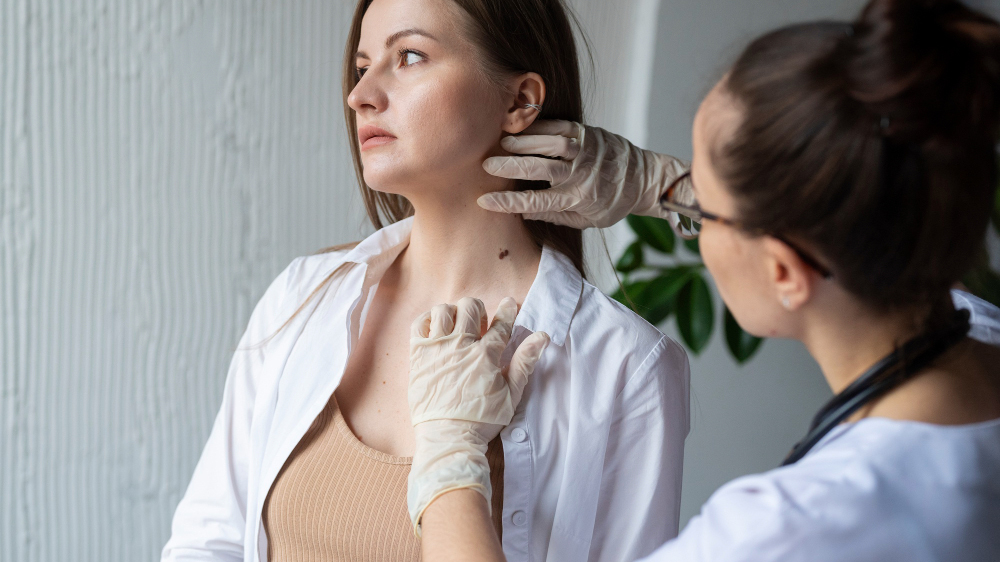
Did you know that about 1 in 5 Americans will develop skin cancer at some point in their life? Skin cancer is the most common type of cancer, and it often starts with a mole. A simple mole check can do more than ease your mind; it can save your life. Moles and sunspots are common, especially in sunny climates like we have in South Texas, but some skin changes can signal something more serious. Learning to recognize what’s normal and what’s not helps you catch potential problems early and seek the right care.
Skin cancer is one of the most common cancers in the United States, yet it’s also one of the most treatable when caught early. Knowing what to look for and where to go for evaluation helps you protect your health and your skin.
What Is Skin Cancer?
Skin cancer occurs when abnormal skin cells grow uncontrollably. Most cases develop from exposure to ultraviolet (UV) radiation from the sun or tanning beds. The two most common types are basal cell carcinoma and squamous cell carcinoma. These usually appear on areas that get frequent sun, like the face, ears, neck, and arms.
Melanoma is less common but more dangerous. It can spread quickly if not detected early, which is why paying attention to changes in moles or new spots is so important. The good news is that most melanomas begin on the skin’s surface, where they’re visible and can be removed before spreading deeper.
Even though anyone can develop skin cancer, people with fair skin, light hair, or a history of frequent sunburns are at higher risk. However, darker skin tones aren’t immune, and the myth that they are has led to higher mortality rates. Because symptoms may look different depending on your skin color, regular checks are recommended for everyone.
Common Skin Cancer Warning Signs
Understanding skin cancer warning signs can help you know when a change deserves attention. The easiest way to remember them is the ABCDE rule: Asymmetry, Border, Color, Diameter, and Evolving.
A mole that isn’t symmetrical (meaning one half looks different from the other) can be a concern. Uneven or blurred edges are another warning sign. Watch for color variations like brown, black, red, or white within the same spot. Size matters too. Moles larger than a pencil eraser (about 6 millimeters) should be checked by a doctor.
But the most important sign is change. If a mole grows, darkens, bleeds, or starts to itch, it’s time to get it examined by your primary care physician. Rapid changes in size or texture can indicate abnormal cell activity that needs professional evaluation.
However, skin cancer doesn’t always start as a mole. It can also appear as a sore that doesn’t heal, a red scaly patch, or a shiny bump. Paying attention to how spots behave over time helps you notice these subtle shifts before they become serious.
How To Perform a Mole Check at Home
Doing a mole check at home is simple and should be part of your regular self-care routine. It’s easiest to do after a shower, using a full-length mirror and a hand mirror to see all areas of your body. Look at your skin under good lighting, and make sure to check less obvious places like your scalp, the soles of your feet, and under your nails.
You’re looking for anything that stands out from your other spots. A mole that looks different in shape, color, or size compared to others is worth a second look from a doctor. It can help to take photos of your moles and compare them every few months. That way, you’ll notice even small changes over time. If you find a new mole or spot that doesn’t fade within a few weeks, schedule an appointment with your healthcare provider.
When to See a Doctor for a Mole
Deciding when to see a doctor for a mole often comes down to trusting your instincts. If something about a spot doesn’t look or feel right, it’s worth getting checked. A physician can evaluate changes in color, texture, or growth patterns and decide whether testing or removal is needed.
Some changes deserve more immediate attention. A mole that suddenly raises from the skin, starts to bleed, or otherwise doesn’t pass the ABCDE test should be examined as soon as possible. Even subtle symptoms, like increased sensitivity or a lingering itch, can be early indicators that the skin needs closer evaluation.
But you don’t have to wait for discomfort or visible damage before seeking care. Making skin exams part of your annual wellness routine is a smart way to track gradual changes over time. That’s especially important in sunny regions like Corpus Christi, where consistent sun exposure increases the likelihood of new spots appearing throughout the year.
Can Primary Care Do A Mole Check?
Many patients are surprised to learn that primary care mole check appointments are a convenient first step for evaluating skin concerns– you don’t necessarily have to go to the dermatologist right away. Your primary care provider can examine moles and sunspots during routine visits or in separate skin screenings.
If something looks suspicious, your provider can order a biopsy or refer you to a dermatologist for further evaluation. In many cases, they can remove small, non-suspicious moles in-office. A primary care mole removal is quick and requires little recovery time. However, if a mole shows signs that it may be cancer, your provider will usually refer you to a specialist. Dermatologists or skin cancer surgeons can perform more detailed biopsies and remove risky lesions with wider margins to ensure all abnormal tissue is gone.
Sunspot vs. Mole: Know the Difference
Understanding the difference between a sunspot vs mole can prevent confusion and unnecessary worry. Sunspots, sometimes called age spots or liver spots, are flat, brown patches that appear after years of sun exposure. They’re caused by an overproduction of melanin, the pigment that gives skin its color.
Sunspots are harmless and often fade slowly with time or with treatment such as prescription creams or light-based therapy. Moles, on the other hand, are clusters of pigmented cells that can be flat or raised. Most are benign, but some can change and become cancerous.
One key difference is texture. Sunspots are always smooth and flat, while moles can have a thicker or slightly raised surface. Moles can also develop hair, which sunspots never do. If you’re unsure which type of spot you have, your doctor can help you tell the difference. A quick evaluation can rule out any concern and guide you toward the right care if treatment is needed.
Protecting Your Skin, Protecting Your Health
Your skin is your largest organ and one of the easiest to monitor for changes. Regular self-checks and timely doctor visits make it possible to detect skin cancer warning signs early, when treatment is most effective.
If you ever wonder when to see a doctor for a mole, trust your instincts. It’s always better to have a spot examined and find out it’s harmless than to ignore a potential warning sign.
Your mole check might take only a few minutes, but it could make all the difference in your long-term health. Stay aware, stay protected, and remember that your primary care team at STMA Corpus Christi is here to help you keep your skin healthy for years to come. Contact us today to set up an appointment!